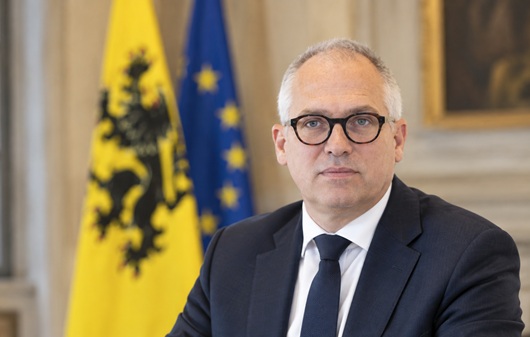
On 30 September, the Flemish Government presented its September Statement for 2027. The budget provides for a substantial savings effort, including measures that will have a direct impact on businesses in Flanders.
For the steel trade, three areas are particularly relevant: training, recruitment and business succession.
The SME portfolio will be discontinued from 2027
The measure with the most direct impact on many steel trading companies is the discontinuation of the SME portfolio (kmo-portefeuille).
From 1 January 2027, companies will no longer be able to submit new applications for training support through the SME portfolio. In 2026, applications can still be submitted as long as the available budget has not been exhausted. According to VLAIO, ongoing files can still be completed until the end of 2027.
This is relevant for steel trading companies because training plays an important role in developing technical and commercial skills. This includes training related to specific professional knowledge, digitalisation, ERP systems, safety, sustainability, management and personnel management.
Currently, small companies can recover 30% of certain training costs through the SME portfolio, up to a maximum of €7,500 in support per year. For medium-sized companies, the support amounts to 20%, also up to a maximum of €7,500 per year. Higher support rates apply to certain types of training, including training related to digitalisation and sustainability.
From 2027, this financial support will no longer be available.
For companies, this means that the cost of the same training will have to be borne entirely by the company, unless another support mechanism applies.
An employment-related social security reduction for certain recruitments will also disappear
A second point of attention is the announced discontinuation of the Flemish targeted social security reduction for people without recent, sustainable work experience.
Under the current scheme, the reduction can amount to up to €1,000 per quarter for four quarters for an employee who meets the relevant conditions. This means a maximum benefit of €4,000 per employee. The scheme is intended, among others, for people who, prior to their recruitment, had been registered with VDAB as non-working jobseekers for at least two years.
Not every new employee falls under this scheme. The impact will therefore vary from one company to another.
For steel trading companies, the measure is nevertheless relevant in a labour market that has been characterised by a shortage of suitably qualified workers for several years. The removal of a financial incentive may increase the cost of certain recruitments.
Preferential regime for family-owned businesses remains in place
There is also important positive news for family-owned steel trading companies.
The Flemish preferential tax regime for the transfer of family-owned businesses and companies will remain in place. The September Statement therefore does not introduce a new abolition or tightening of this regime. The conditions were, however, already amended as of 2026. For example, residential property and building land are excluded from the preferential regime.
For family-owned companies active in the steel trade, maintaining this regime is important for ensuring business continuity and preparing the transfer to the next generation in good time.
Training and labour market access therefore become important areas of attention
For Belmetal, it is particularly the combination of the various measures that is relevant.
The steel trade needs employees with technical knowledge, commercial skills and a good understanding of an increasingly complex regulatory and market environment. At the same time, companies need to continue investing in digitalisation, safety and productivity.
With financial support for training being discontinued and certain recruitment incentives being removed, the direct cost for companies will increase.
The next step will be to further define the detailed provisions of the various measures. These will need to be closely monitored, as they will affect areas such as training, the labour market, labour costs and the continuity of family-owned businesses.