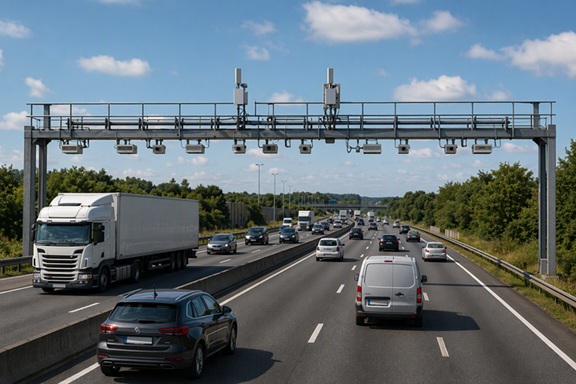
Belgian regional authorities are working on the introduction of a digital road vignette for passenger cars and light commercial vehicles. Flanders and Wallonia have already reached a political agreement, and the Brussels-Capital Region also intends to participate in a harmonised Belgian system. The planned implementation date is May 2027, subject to final approval by the relevant governments.
For the Belgian steel trade, the impact is expected to remain limited. However, companies operating in a European market should take several points into account.
Belgium is part of a broader European trend. Several European countries already have systems whereby road users contribute to infrastructure financing. Austria and Switzerland have long applied road vignette systems for certain vehicles, while France, Germany and other countries use mileage-based charges for heavy goods transport. For companies operating across borders, monitoring the various national systems is becoming increasingly important.
Heavy goods transport remains under Viapass
Steel transport is mainly carried out by trucks weighing more than 3.5 tonnes. For these vehicles, nothing changes: they remain subject to the existing kilometre charge system operated, through Viapass, that just saw an increase.
The new road vignette will therefore not be added on top of the existing heavy vehicle charge. No significant additional transport costs are expected for the steel logistics chain.
Limited impact on company vehicles
The new system will affect passenger cars, company lease vehicles and light commercial vehicles. Companies using these vehicles for sales visits or smaller deliveries will need to purchase an annual digital road vignette.
For light commercial vehicles, the circulation tax will be partially reduced, while the cost of the vignette remains tax deductible when used for professional purposes. The additional financial impact should therefore remain limited, although fleet administration will require extra attention.
Foreign companies need to prepare
For European steel traders, the main issue is practical.
Foreign trucks above 3.5 tonnes will continue to use the existing Viapass system. However, sales representatives, technicians or employees travelling to Belgium with a passenger car or light commercial vehicle will most likely need a Belgian digital road vignette.
Foreign companies will therefore need to check the purchase and registration requirements in advance. This follows a wider European trend where companies already have to deal with different systems: digital vignettes, mileage charges and specific registration requirements for commercial vehicles.
Unlike Belgian vehicles, foreign companies will not benefit from any compensation through the Belgian vehicle taxation system.
European legal review remains important
The introduction of a Belgian road vignette is also being closely monitored at European level. In 2019, the Court of Justice of the European Union cancelled Germany’s planned passenger car toll because German drivers would have been fully compensated through a tax reduction, while foreign drivers would have paid the charge in full. The Court considered this to constitute indirect discrimination based on nationality.
Belgian authorities are seeking to avoid this risk by applying the vignette to all users and integrating compensation into a broader reform of vehicle taxation.
However, depending on the final implementation, a legal challenge at European level cannot be completely ruled out.
Limited impact on the steel sector
For the Belgian steel trade, the structural impact will remain limited. Heavy goods transport will continue to fall under the Viapass system and logistics costs for steel transport are therefore unlikely to change significantly.
The main consequences concern company vehicle fleets, administrative monitoring and preparation for international visitors and suppliers.
---
Key points for international traders
- Heavy goods vehicles above 3.5 tonnes: remain subject to Viapass.
- Passenger cars and light commercial vehicles: check vignette requirements before entering Belgium.
- Monitor the final implementation date and registration procedure.